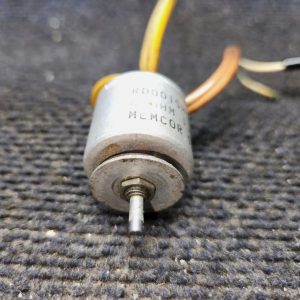
The Cessna 172F Rheostat (No Knob)
Whether buyers search for a Cessna 172F Rheostat, Cessna 172F Lighting Rheostat, or Cessna 172F Panel Light Rheostat, electrical compatibility and individual condition should guide the purchase.
A Cessna 172F Cockpit Dimmer may function as a Cessna 172F Instrument Light Control, while a Cessna Instrument Panel Rheostat should match the intended wiring and electrical load.
Whether buyers need an Aircraft Lighting Rheostat, Aircraft Panel Light Dimmer, Aviation Lighting Control Rheostat, or Aircraft Instrument Lighting Control, professional evaluation should precede use.
Whether buyers seek Cessna 172F Electrical Parts, a Cessna 172F Dimmer Switch, Cessna Panel Lighting Control, or a Cessna Aircraft Rheostat, every component should be identified individually.
Reviewing the RD0015H1600JBC Component
Every letter, number, and suffix should be recorded because similar rheostats may differ in resistance, wattage, shaft style, terminal arrangement, dimensions, and operating characteristics.
Any manufacturer logo, electrical rating, production code, serial marking, repair label, or donor-aircraft information should remain associated with the component.
Selecting a Replacement Control Knob
The no-knob description means the control knob is not included unless the listing states otherwise, so the buyer should plan for a compatible replacement or reusable original knob.
Improvised drilling, adhesive bonding, force-fitting, or overtightening can damage the shaft and reduce future repair options.
How a Cessna 172F Rheostat Controls Lighting
The exact circuit design should be confirmed through aircraft wiring information rather than assumed from the component name alone.
Smooth dimming can help reduce glare and support instrument readability during night or low-light operations when the complete system operates correctly.
Choosing the Correct Panel Light Rheostat
A rheostat associated with a Cessna 172F should not be advertised as universally compatible with every Cessna 172 variant.
Previous aircraft modifications should be reviewed before reconnecting the replacement component.
Assessing a Used Cockpit Dimmer
A detailed inspection provides stronger evidence than a general good-condition description.
A bent shaft can cause binding, uneven control, knob misalignment, or additional load on the internal mechanism.
Inspecting Rheostat Terminals and Wiring
Terminal arrangement should be photographed and documented before the original component is disconnected.
Connections should remain secure without placing excessive side load on the rheostat terminals.
Evaluating Dimming Control Operation
Testing may include resistance measurement, continuity checks, smoothness evaluation, terminal mapping, and controlled functional testing appropriate to the identified component.
Qualified electrical evaluation supports responsible use of the Aviation Lighting Control Rheostat.
Troubleshooting a Cessna Cockpit Dimmer
Structured troubleshooting helps prevent unnecessary parts replacement.
A dimming range that differs from the original may indicate an incorrect electrical value or altered lighting load.
Restoring a Classic 172F Cockpit
Restorers may seek the correct housing, shaft, mounting style, knob design, panel location, and control labeling.
The missing knob may be sourced separately, reproduced appropriately, or reused from the removed control when its fit and condition remain suitable.
Managing Electrical Parts Inventory
The entire lighting circuit should be examined before all required components are ordered.
Electrical parts should be labeled and segregated according to identity, test status, and condition.
Evaluating Electrical Component Repair Value
Repair should not be selected solely because an original component is difficult to replace.
Any repair organization, work performed, replacement materials, and results should be documented.
Buying a Cessna 172F Rheostat
Components with clear donor-aircraft information, current photographs, and transparent test descriptions are easier for professional buyers to evaluate.
Unsupported direct-fit, guaranteed dimming, universal compatibility, or airworthiness claims should be avoided.
Aircraft Lighting Rheostat Pre-Purchase Guide
The seller should provide photographs showing the housing, shaft, mounting threads, terminals, markings, attached wiring, damage, and repaired areas.
- Resolve identity, electrical compatibility, fitment, and package-completeness questions before payment.
- Check that the shaft rotates through its intended range without binding, excessive looseness, unexpected stops, or mechanical instability.
- Inspect and photograph the rheostat immediately after delivery before cleaning, testing, opening, repairing, wiring, mounting, or modifying it.
Shipping and Storing the Aircraft Rheostat
Loose nuts, washers, terminals, or wiring pieces should be packaged and labeled separately.
Test records and identification information should remain associated with the component.
Fitting P/N RD0015H1600JBC
Every wire and terminal should be identified and documented before removal.
The mounting nut and washer should secure the component without damaging the threads, housing, panel, or shaft alignment.
The panel should be checked under suitable lighting conditions without promising a particular brightness improvement.
Long-Term Rheostat Care
Loose mounting, flickering, dead spots, or abnormal resistance should be investigated promptly.
Cleaning products should not enter the rheostat housing or electrical connections.
Choosing the Cessna 172F Rheostat (No Knob)
The Cessna 172F Rheostat (No Knob)
The strongest purchasing decision begins with confirming the complete part number, manufacturer, aircraft applicability, circuit function, resistance range, voltage, power rating, terminal arrangement, shaft dimensions, knob requirements, test status, and documentation.
Whether the product is described as an Aircraft Panel Light Dimmer, Aviation Lighting Control Rheostat, Cessna 172F Dimmer Switch, or Aircraft Instrument Lighting Control, electrical condition remains essential.
With transparent test status, protected shipping, correct fitment, a suitable knob, and qualified maintenance click here review, the component can support a professional Cessna 172F project.